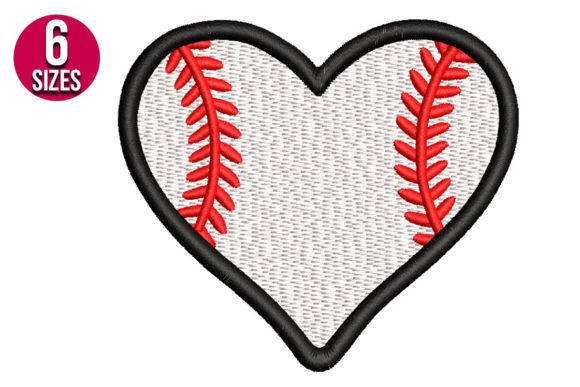
Baseball Heart: A Designer’s Review for Real Stitching
As an embroidery designer who has spent countless hours hooping, stitching, and unpicking, I approach every new machine embroidery design with a mix of curiosity and skepticism. We have all been there: you download a cute graphic, load it onto your machine, and hope for the best. But when it comes to running a craft business or creating high-quality personalized gifts, hope is not a strategy. You need reliability. Recently, I evaluated Baseball Heart, a sports-themed motif that promises to blend athletic passion with a touch of softness. After putting it through its paces on various fabrics and considering its potential for commercial use, here is my honest assessment of how this design performs in the real world.
First Impressions: Balancing Sporty Edge with Soft Appeal
The first thing that strikes you about Baseball Heart is its clever conceptual fusion. It takes the rigid, structured lines of a baseball—typically associated with grit and competition—and wraps them into the universal symbol of love and care. This duality makes it incredibly versatile. It is not just for the die-hard fan; it is for the mom sewing a baby onesie, the partner making a Valentine’s Day gift, or the boutique owner curating a spring collection. The visual personality is playful yet clean. It avoids the clutter that plagues so many digital embroidery files, focusing instead on clear shapes that translate well from screen to thread.
From a layout perspective, the design feels balanced. Whether you are aiming for a minimalist aesthetic on a high-end hoodie or a bold statement on a tote bag, the composition holds up. It does not rely on excessive tiny details that might get lost in the stitching process, which is a common pitfall in sports-themed graphics. Instead, it leans into strong outlines and recognizable forms, ensuring that the final finished product looks professional rather than amateurish.
Real-World Application: Where This Design Shines
I tested Baseball Heart in a scenario that many Etsy sellers and small shop owners will recognize: preparing a custom order for a client who wanted a unique gift for a baseball-loving father. I chose a medium-weight cotton canvas for a tote bag and a soft fleece for a sweatshirt. The results were distinct but equally successful, highlighting the design's adaptability across different fabric textures.
On the tote bag, the design acted as a central focal point. The contrast between the white stitching and the natural canvas created a crisp, modern look. This is where the design’s clarity really matters. Because the shapes are well-defined, the stitch density appeared consistent, avoiding those unsightly gaps or overly dense patches that can distort fabric. For sweatshirt embroidery, the design sat comfortably on the chest without feeling too heavy. It added a personal touch to a standard garment, elevating it from basic apparel to a cherished personalized gift.
Beyond apparel, I can see this working beautifully as an embroidered patch. Patches are trending heavily in the handmade market right now, and a compact, thematic design like this is ideal for iron-on or sew-on applications. It would also make a charming accent on baby embroidery projects, such as bibs or burp cloths, provided the scale is adjusted appropriately for smaller items. The theme is gender-neutral enough to appeal to a broad audience, making it a safe bet for holiday embroidery runs or back-to-school collections.
Technical Considerations and Potential Pitfalls
While Baseball Heart is a strong contender for many projects, no design is universally perfect without proper preparation. As a reviewer, I must point out where caution is needed. If you are planning to stitch this on stretchy fabric like jersey knits or performance wear, your choice of stabilizer is critical. Sports apparel often moves and stretches, and if the stabilizer is too weak, the design may pucker or distort over time. I recommend using a cut-away stabilizer for garments that will be washed frequently, ensuring the integrity of the stitches remains intact.
Another area to watch is the hoop size. While the description suggests it works on caps and hats, curved surfaces present unique challenges. If you are stitching on a cap, ensure the design fits within the usable area of your cap frame without hitting the seams. The curvature can sometimes cause slight shifting, so testing on a scrap piece of similar material is non-negotiable. Additionally, if you are working with dark fabric, consider how your thread colors will pop. A white or light gray thread will provide high contrast, but if you choose team colors, ensure they do not blend into the background. Always test your color combinations on a scrap piece before committing to the final piece.
For those interested in using this as an applique design, check the file details carefully. If it includes applique steps, ensure you are comfortable with the placement and trimming process. Applique can reduce stitch count and bulk, which is great for baby items, but it requires more manual intervention during the stitching process. If it is a standard fill or satin stitch design, pay attention to the direction of the fills. Good designs account for grain and tension, but a quick test stitch will confirm if any adjustments are needed.
Commercial Value and Brand Consistency
For commercial embroidery professionals and craft business owners, the value of a design lies not just in its looks, but in its sellability. Baseball Heart has strong market potential because it taps into two evergreen niches: sports fandom and gifting. It allows you to create products that feel thoughtful and specific, which increases perceived value. When customers see a well-executed, clean design on a custom apparel item, they trust the quality of the maker. This design supports that trust by offering a polished look that does not require extensive editing or cleanup.
However, always verify the licensing terms before selling. Just because a file is labeled for commercial use does not mean you can resell the digital embroidery file itself. Typically, you are selling the handmade product or the physical item with the design stitched on it. Clarifying this protects your business and respects the original designer’s rights. Using this design in your printable mockup portfolios can also help attract clients who are looking for sports-themed customization, showcasing your ability to handle thematic elements with professionalism.
Final Verdict: A Reliable Staple for Your Library
In the world of Embroidery, finding designs that are both aesthetically pleasing and technically sound can be a challenge. Baseball Heart succeeds in bridging that gap. It is a practical, versatile asset for any designer’s library. Whether you are creating design assets for a large run of team merchandise or stitching a one-off tote bag design for a friend, this motif delivers. It respects the limitations of the machine while maximizing visual impact.
My advice? Download it, but do not skip the test stitch. Check your tension, choose your stabilizer wisely, and let the design do what it does best: combine the love of the game with the art of stitching. For small shop product lines looking to add a touch of seasonal or thematic variety, this is a solid investment. It is not just a graphic; it is a tool for creating connection, one stitch at a time.