Swimming Jellyfish: A Designer's Review for Brand Merch
As an embroidery designer who has spent years digitizing and reviewing files for commercial use, I approach every new machine embroidery design with a critical eye. It is not just about whether the image looks cute on a screen; it is about how that digital embroidery file translates into a tangible finished product that elevates a brand. Today, I am taking a close look at the Swimming Jellyfish design to evaluate its potential for small business merchandise, branded patches, and custom apparel.
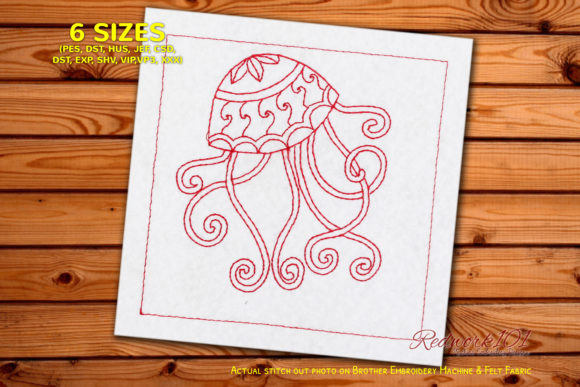
The first impression of Swimming Jellyfish is one of playful elegance. Unlike aggressive or overly complex marine imagery, this design carries a friendly and whimsical personality that fits perfectly with boutique brands, creative studios, and lifestyle businesses. The fluidity implied by the title suggests movement, which is excellent for capturing attention on static items like tote bags or caps. However, the description notes an important technical detail: "The Box Stitch shown in the picture is optional." This flexibility is a massive plus for professional decorators. It means we can adapt the embroidery file to fit specific branding guidelines, removing the border if we need a floating logo or keeping it if we require a contained badge for a uniform.
Real-World Applications for Small Business Merch
When considering where to deploy Swimming Jellyfish, the possibilities for small business merch are extensive. For a local café or bakery near the coast, this design serves as an ideal chest logo accent on staff aprons. The apron embroidery market is huge right now, and customers love seeing high-quality stitching on the garments their baristas or bakers wear. Because the design likely features flowing lines typical of jellyfish tentacles, it adds a touch of organic movement to the rigid structure of a work uniform.
For retail boutiques and Etsy sellers, this design shines as an embroidered patch. Patches are a low-risk, high-reward add-on for increasing average order value. You can stitch Swimming Jellyfish onto twill backing, cut it out, and sell it as a standalone accessory or sew it onto denim jackets and canvas totes. The description mentions that the outer box color often differs, which allows for incredible customization. A surf shop could request neon thread colors, while a children's boutique might opt for soft pastels. This adaptability makes it a versatile asset for custom apparel lines.
Furthermore, this design is well-suited for cap embroidery. The curved surface of a baseball cap can be tricky for detailed designs, but if the digitizing handles the underlay correctly, the simple, recognizable silhouette of a jellyfish works beautifully on the front panel. It acts as a subtle brand mark without overwhelming the wearer. Similarly, for tote bag design, the contrast of colorful threads against natural canvas creates a premium, handmade aesthetic that resonates with eco-conscious consumers.
Technical Considerations and Production Challenges
While the artistic merit of Swimming Jellyfish is clear, a professional review must address the technical hurdles of production. The category is listed as "Fish," but the subject matter involves delicate, trailing elements. In the world of commercial embroidery, long runs of stitching without adequate anchoring can lead to looping or snagging, especially on items that undergo frequent washing like uniforms or tote bags.
One must be cautious regarding stitch density. If the design relies heavily on satin stitches to create the glossy look of a jellyfish bell, it might become too stiff for lightweight fabrics. Before running a full production batch, I strongly advise testing the design on the actual fabric you intend to use. Fabric texture plays a huge role; a pique polo shirt will react differently than a smooth nylon windbreaker. Additionally, if you are planning to use this on dark uniforms, you must verify that the thread colors provide sufficient contrast. A translucent jellyfish effect might get lost on a navy blue shirt unless a white underlay or outline is utilized effectively.
Size is another critical factor. The description implies there is an optional box, which helps define the boundaries. However, if you intend to shrink this design for a small pocket logo or a tiny tag, ensure the fine details of the tentacles do not merge together. Hoop size limitations should also be checked against your specific machine capabilities. Always create a printable mockup for client approval before hooping up the machine. This visual aid helps manage expectations regarding scale and placement.
Impact on Brand Identity and Customer Trust
Incorporating Swimming Jellyfish into your product line does more than just decorate an item; it strengthens your brand identity. Consistency is key in building customer trust. If your brand voice is ocean-inspired, calming, or nature-focused, this design reinforces that narrative visually. When a customer receives a package with a neatly stitched patch or a branded tote featuring this motif, it signals professionalism and attention to detail.
For handmade product creators, the perceived value of embroidered goods is significantly higher than printed ones. The texture of the thread and the dimensionality of the stitches convey quality. Using a well-executed design like Swimming Jellyfish can justify a higher price point for your merchandise. It transforms a standard tote bag or t-shirt into a collectible piece of art. Moreover, because the design allows for color variations (as noted in the description regarding the outer box), you can maintain visual consistency across different product lines while still offering variety.
Essential Designer Notes for Success
To ensure the best results when using this design asset, follow these practical steps derived from years of shop floor experience:
- Test in Black and White First: Before committing to colorful threads, stitch a sample in black and white to check the clarity of the outlines and the integrity of the shape.
- Verify Scalability: Confirm that the design holds up at the smallest size you intend to use, particularly for patch applications.
- Check Thread Contrast: Ensure your chosen thread colors pop against the base fabric, especially for dark garments.
- Inspect Spacing: Look closely at the spacing between the tentacles to prevent them from bridging or tangling during the stitch-out.
- Confirm Hoop Size: Double-check that the design dimensions fit within your available hoop area without requiring re-hooping.
- Use Proper Stabilizer: Select a stabilizer that matches the weight and stretch of your fabric to prevent puckering.
- Create Client Mockups: Always present a digital or physical mockup to your client to confirm placement and sizing.
- Review Licensing: Since this is for business use, confirm the commercial licensing terms of the digital embroidery file before selling finished goods.
It is also vital to note that the provided description does not specify exact stitch counts, file formats, or precise license terms. As a responsible business owner, you must contact the vendor or check the product listing thoroughly to obtain this data. Knowing the stitch count helps estimate production time, and understanding the file format ensures compatibility with your embroidery machines.
In conclusion, Swimming Jellyfish offers a charming and versatile option for businesses looking to expand their embroidered offerings. Whether used for cap embroidery, staff uniforms, or retail patches, its adaptable nature and appealing aesthetic make it a strong contender for enhancing brand visibility. With careful attention to technical details like stabilizer choice and thread tension, this design can become a staple in your catalog of premium, handmade-style merchandise.